Knowledge Frozen in Stone
Concrete relief murals by artist Gurdon Woods at our future museum site invite reflection on symbolic language and the rhythms of human understanding.
Over decades, millions of Bay Area drivers have passed the distinctive sawtooth-roofed building at the heart of the iconic campus that once housed publisher McGraw-Hill and the Birkenstock footwear company—and that will soon become home to a world-class art and design museum. The site itself slopes steeply from the surrounding hills down to the busy Highway 101 freeway, but was thoughtfully sculpted by landscape architect Tito Patri with layers of berms and retaining walls nestled into the property.
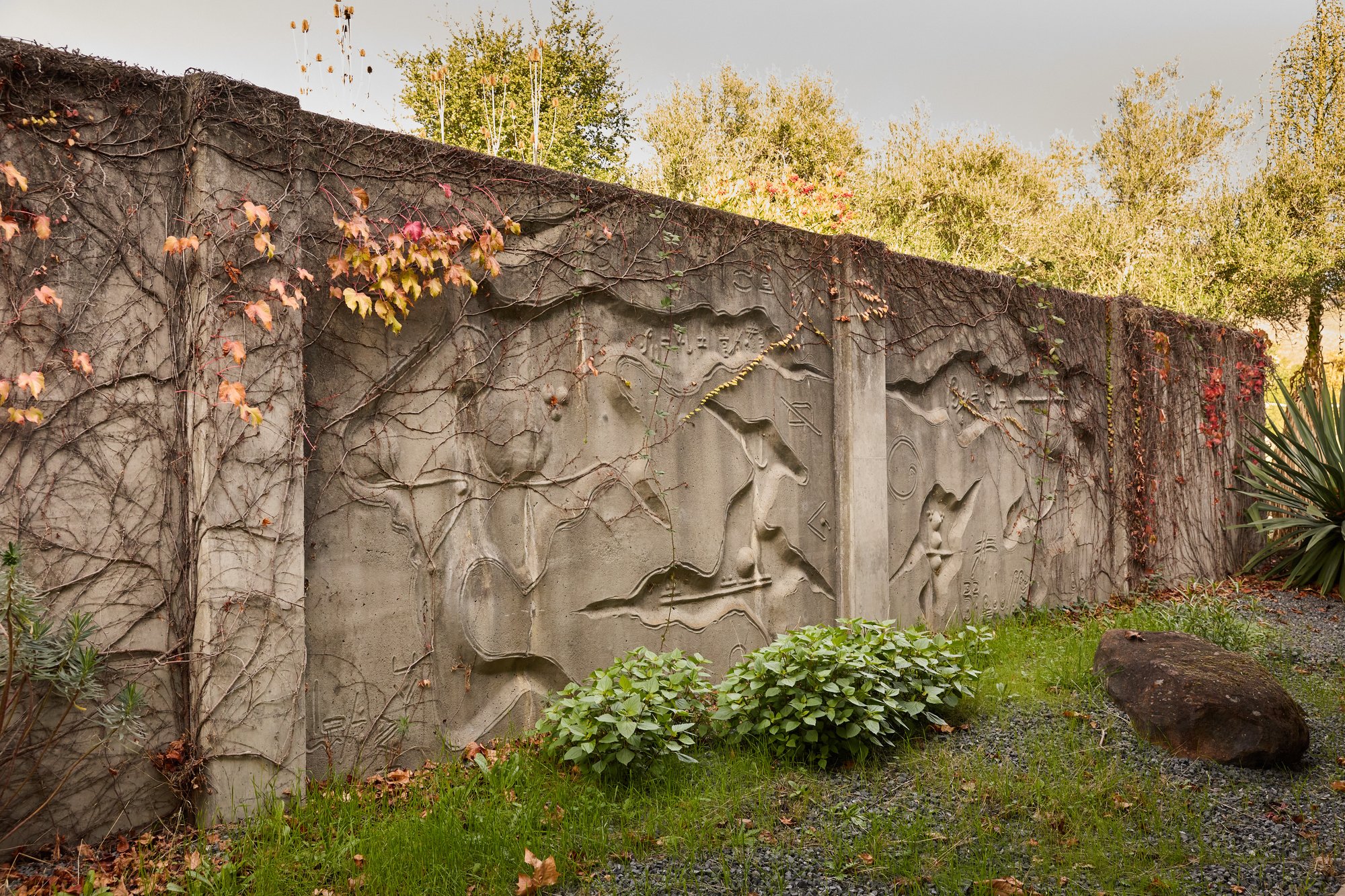
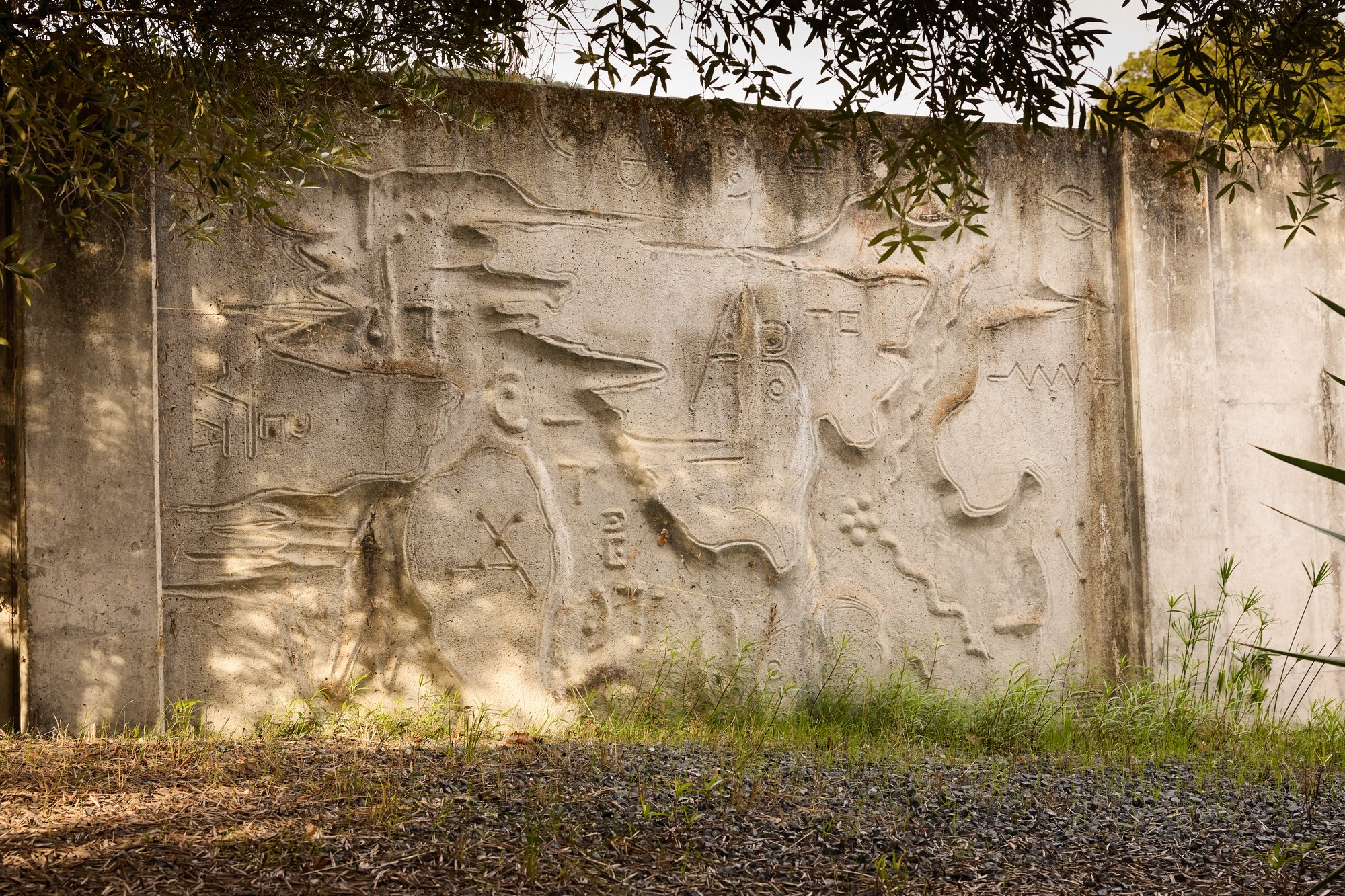
Set quietly into the hillside behind the secondary office building, one extensive retaining wall carries a story that unfolds slowly, rewarding those who look closely. This wall is adorned with a series of monumental relief murals by famed sculptor and educator Gurdon G. Woods (1915–2007), carved directly into the concrete and integrated seamlessly into the contours of the site itself.
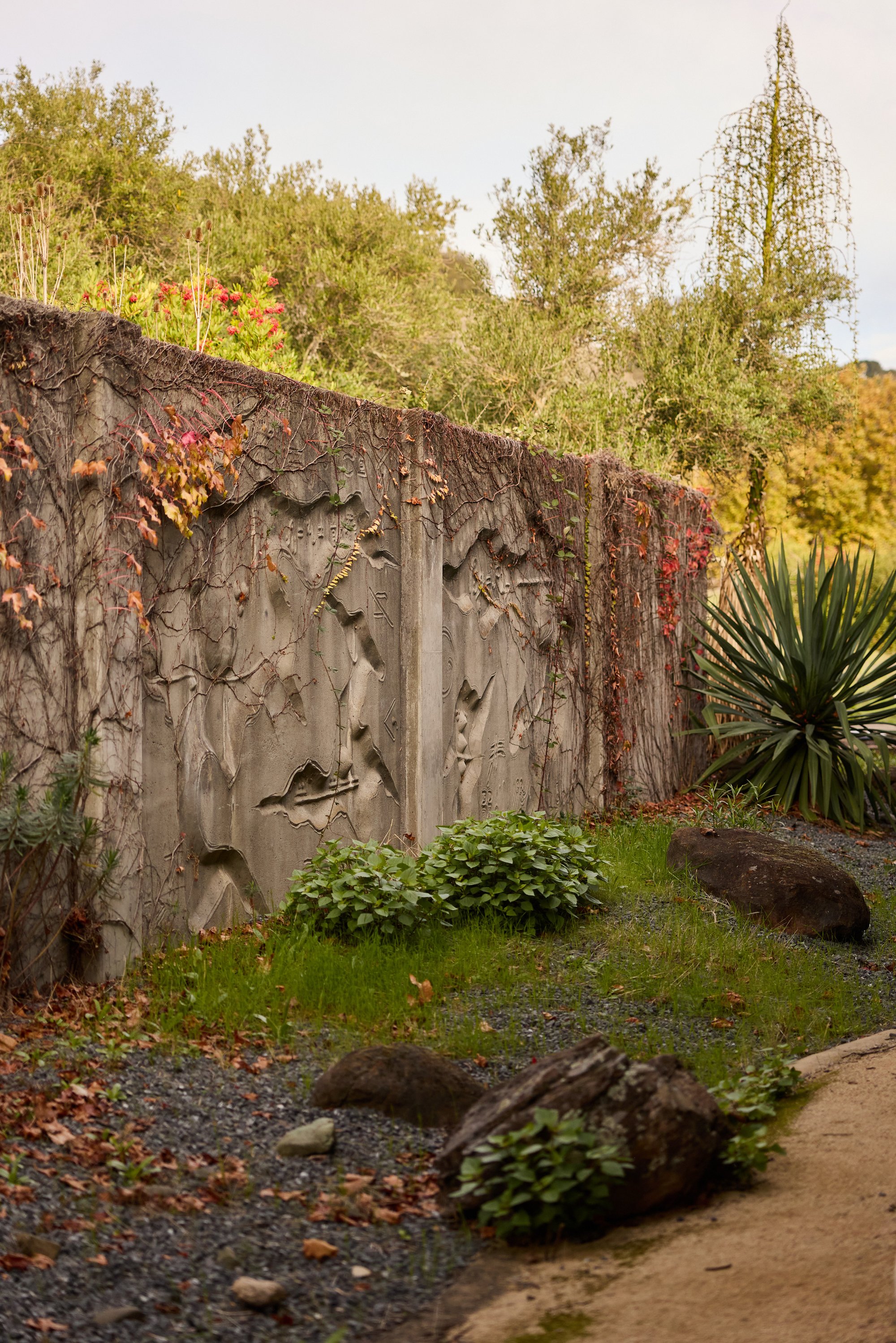
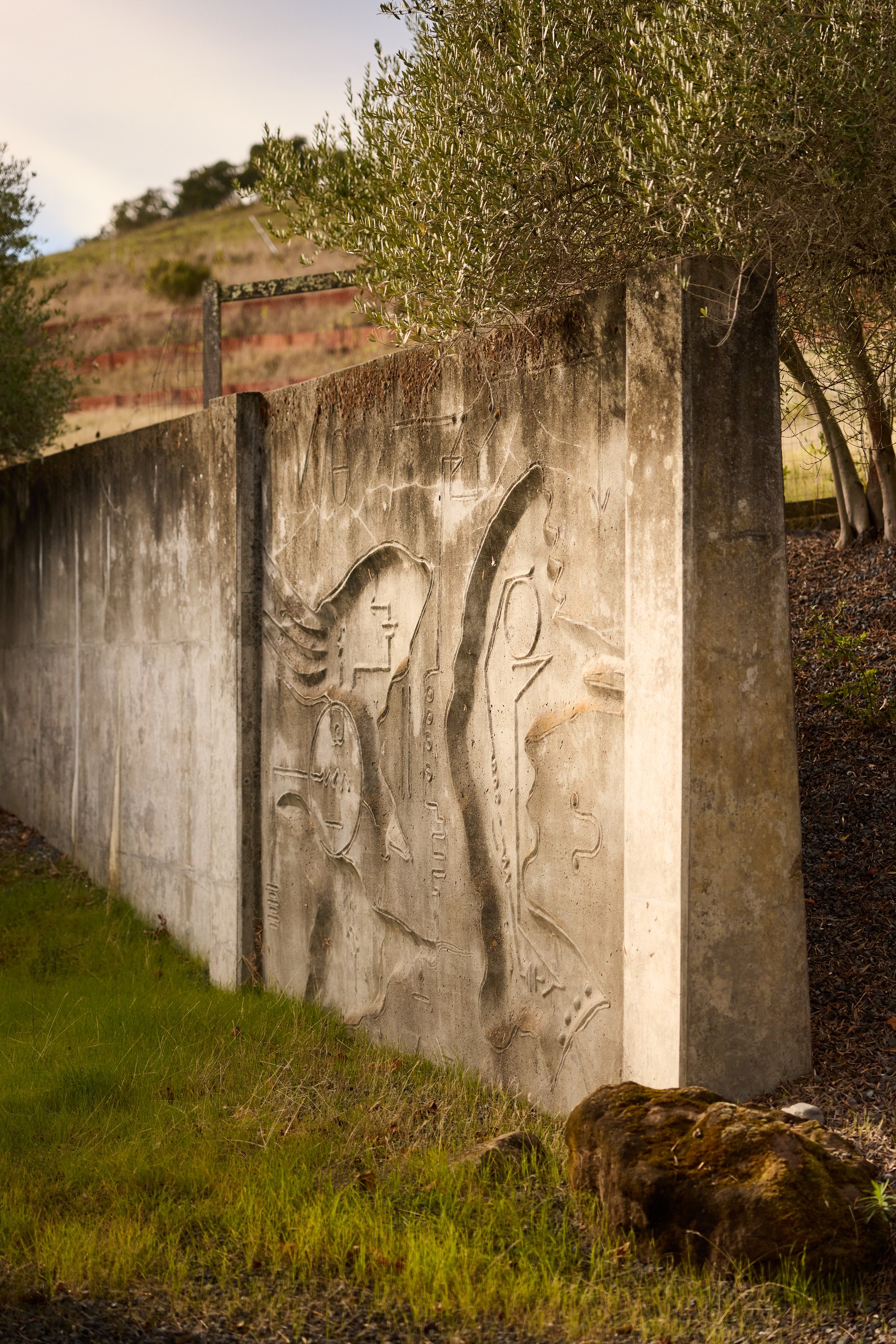
Stretching 420 feet, and set back from the western facade of the office building, Woods’s murals transform utilitarian infrastructure into a meditation on how knowledge is formed, encoded, and shared. Most screened by years of ivy growth, the panels slow the eye, inviting a pause not unlike the one that precedes understanding—an in‑between space where curiosity begins to stir.
Woods approached art as a form of inquiry. A sculptor by training, he was equally devoted to teaching and institution‑building, founding the art department at the University of California, Santa Cruz; serving as director of the Otis Art Institute in Los Angeles; and later acting as deputy director of programs at the Natural History Museum of Los Angeles. Across these roles, he championed art as a mode of thinking—a way to examine systems, symbols, and the structures through which ideas travel. That philosophy is embedded in these murals, where material, meaning, and education converge.
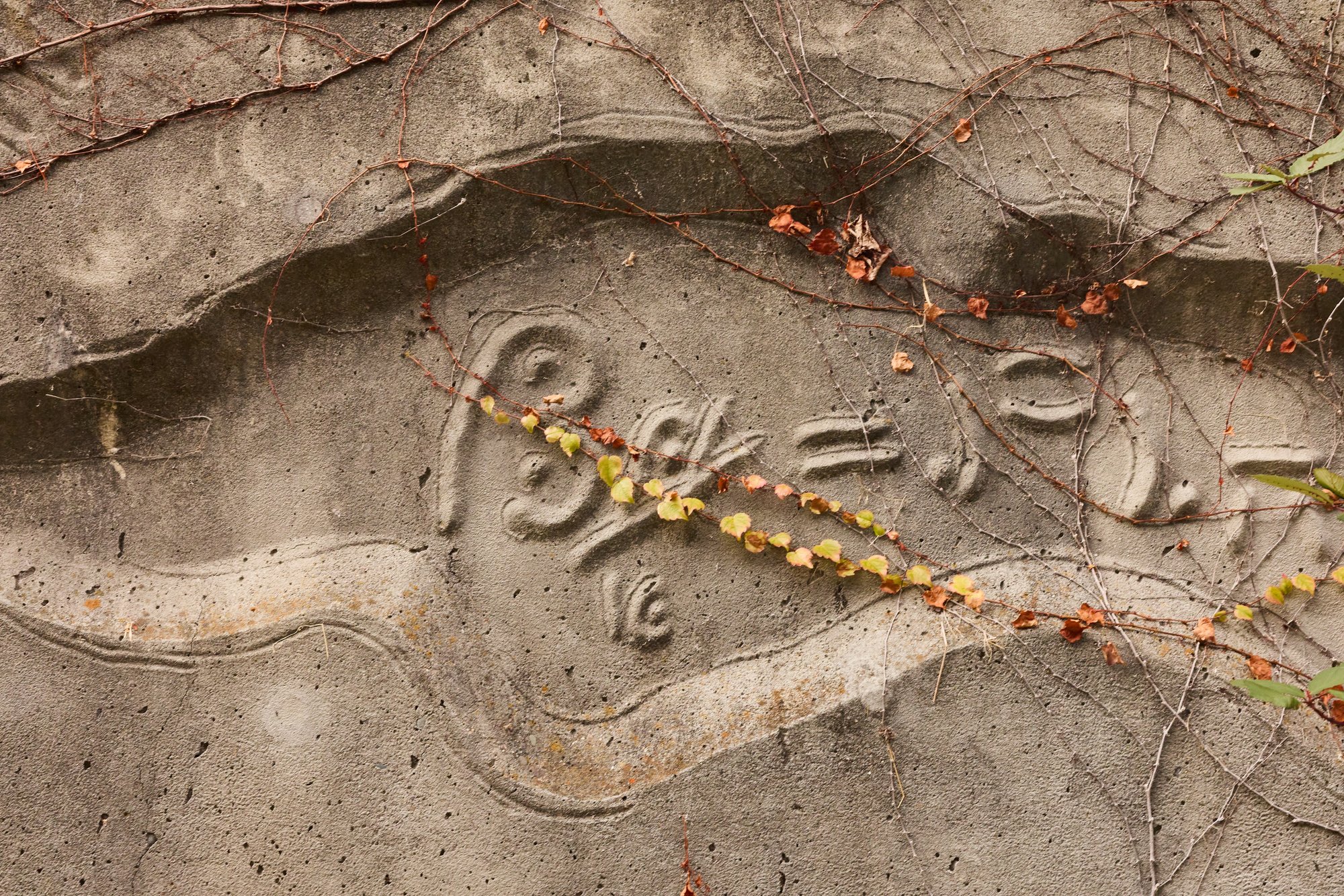
In 1965, when McGraw‑Hill commissioned Woods to create the mural series for its newly developed campus, rather than producing a single continuous image, Woods composed seven cast‑relief panels, executed in a mixture of sand and dry cement. Their surfaces are etched with enigmatic markings that resemble ancient scripts or coded diagrams, hovering between legibility and abstraction.
The panels explore four thematic realms closely tied to McGraw‑Hill’s identity as an educational textbook publisher: electricity, physics, mathematics, and printing. Within them, fragments of recognizable imagery emerge—a vacuum tube, a transformer, directional currents of electrical flow; exploding atoms and the formula E=mc²; an isosceles triangle, vectors indicating magnitude and direction, the Greek letters Sigma and Mu; sheets of paper threading their way through rotary presses. These references suggest textbook diagrams distilled to their symbolic essence, stripped of explanatory text and reimagined as visual language.
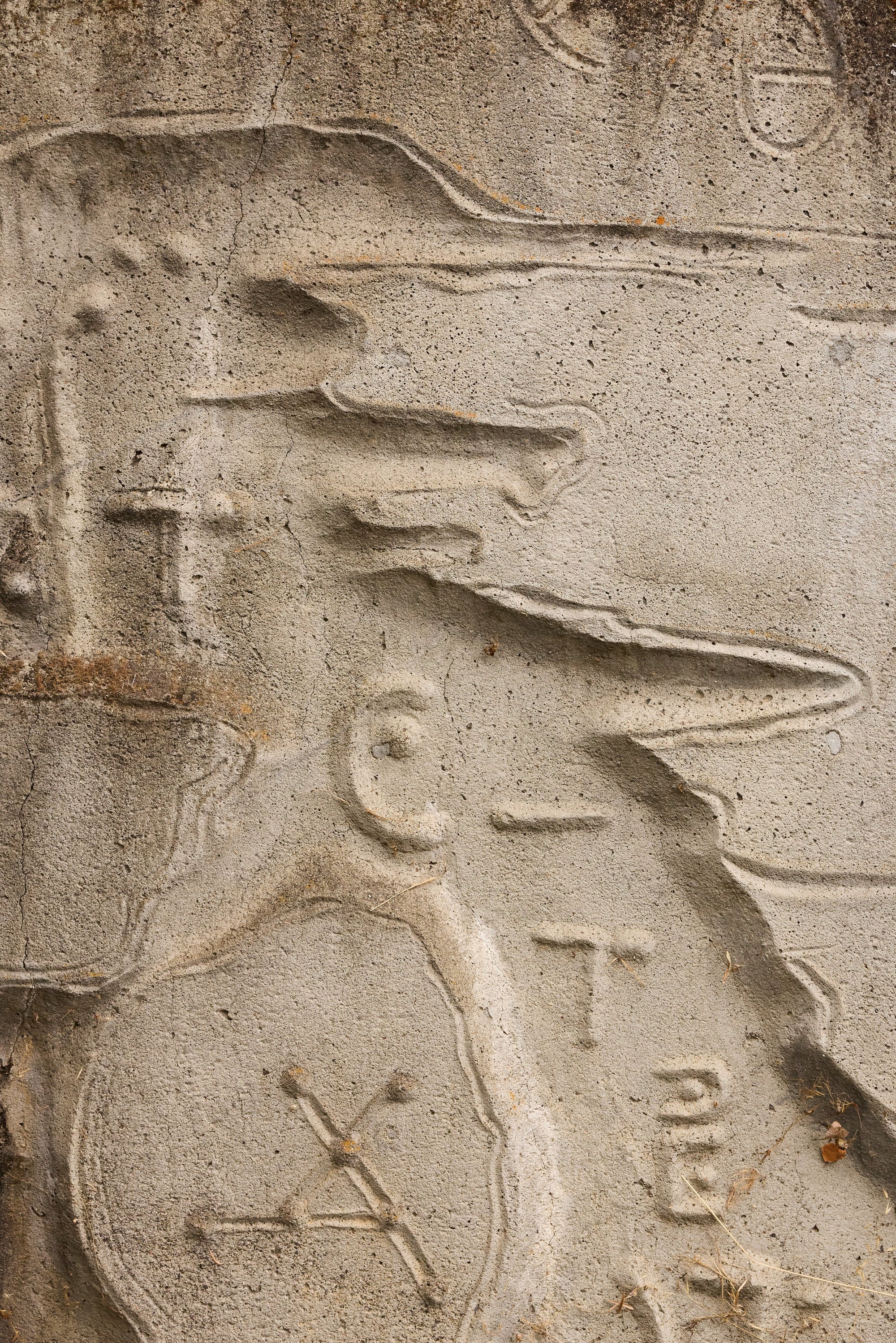
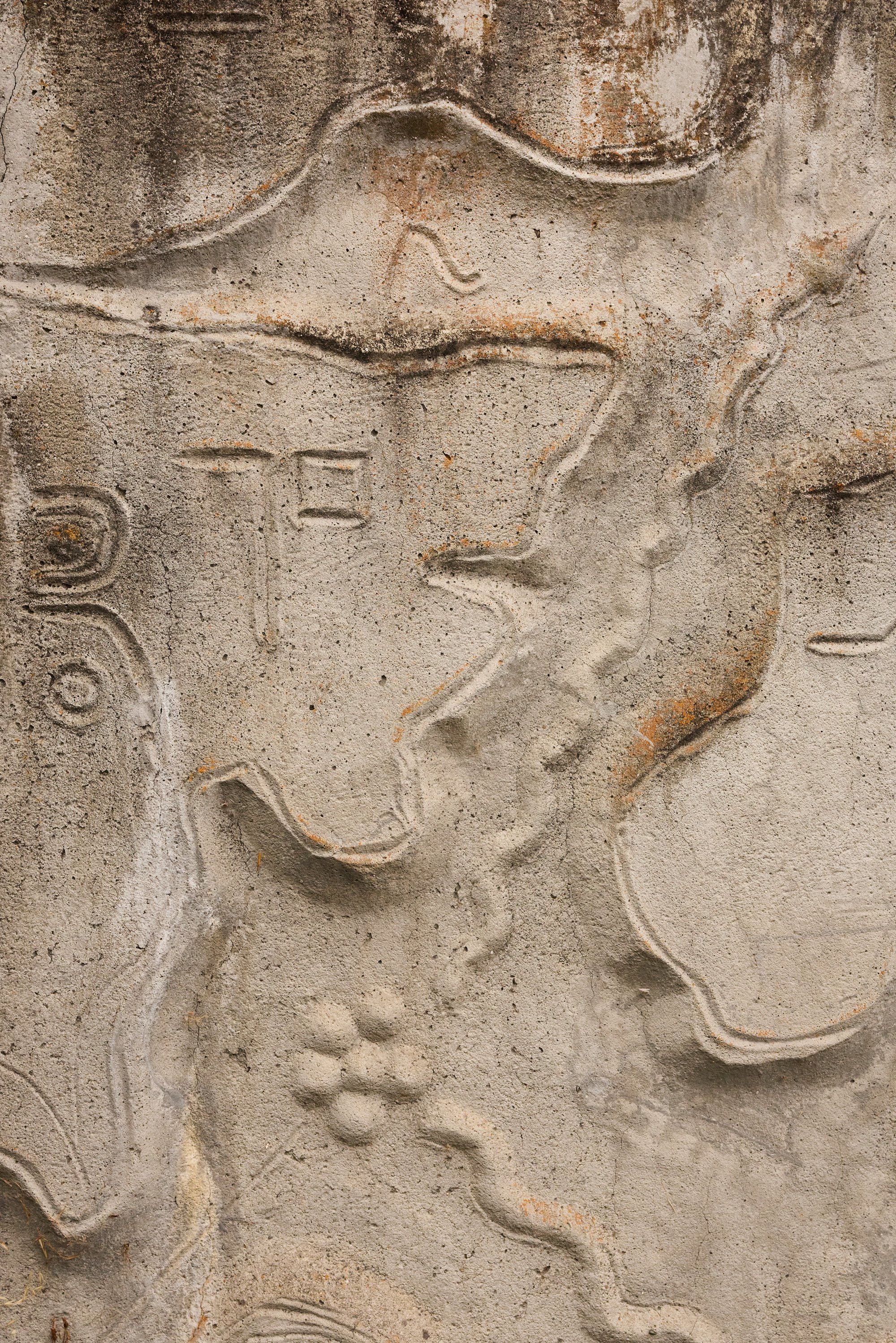
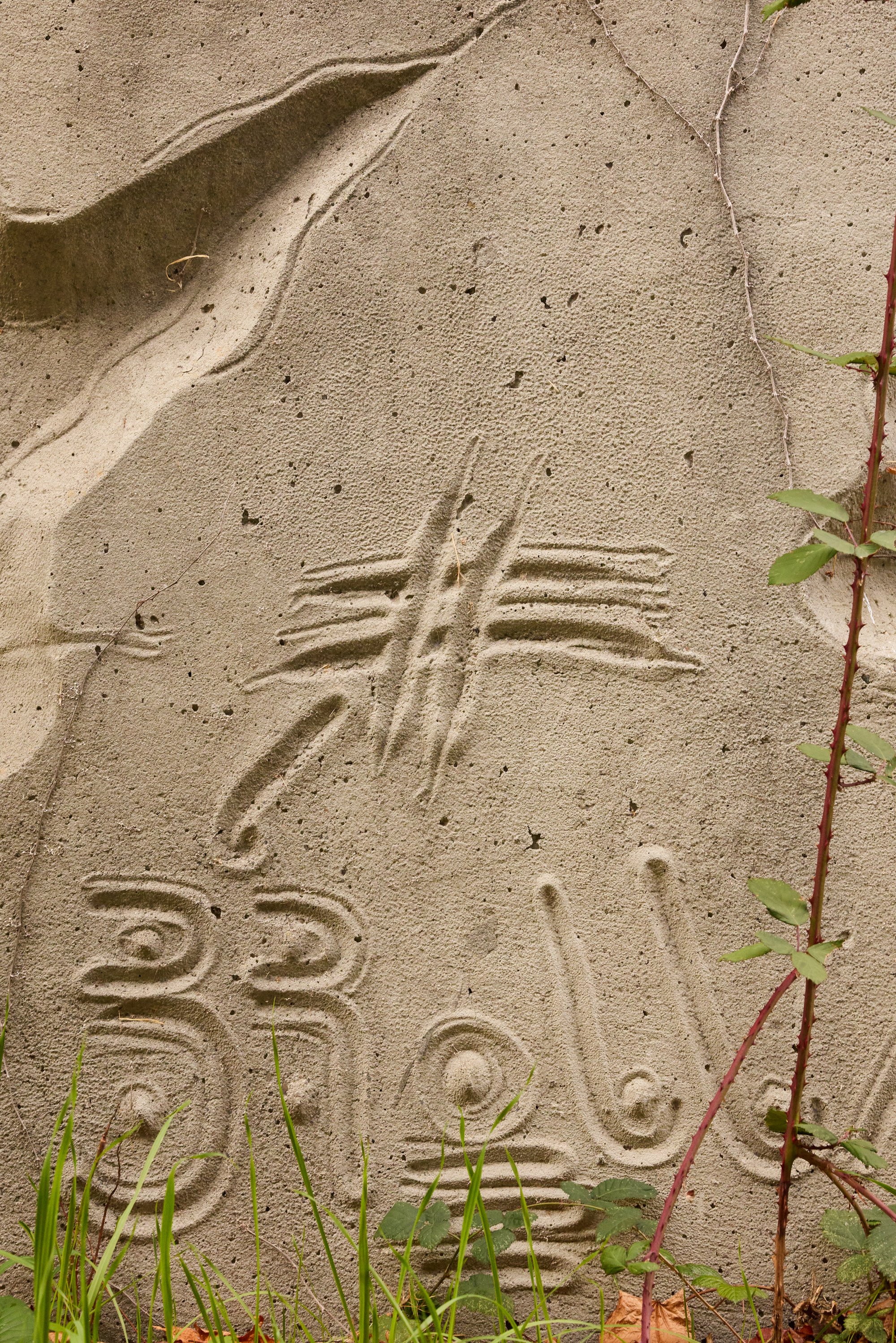
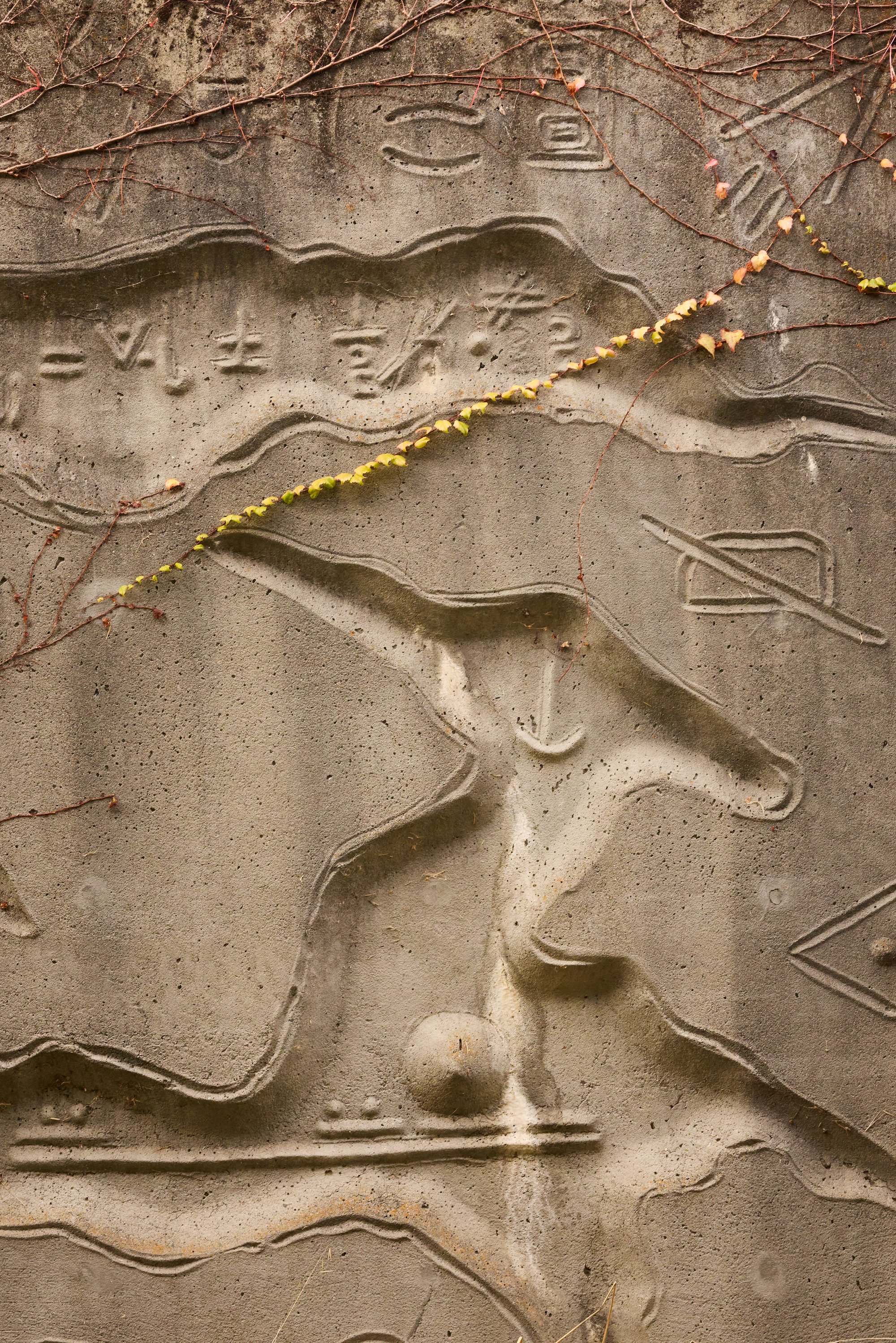
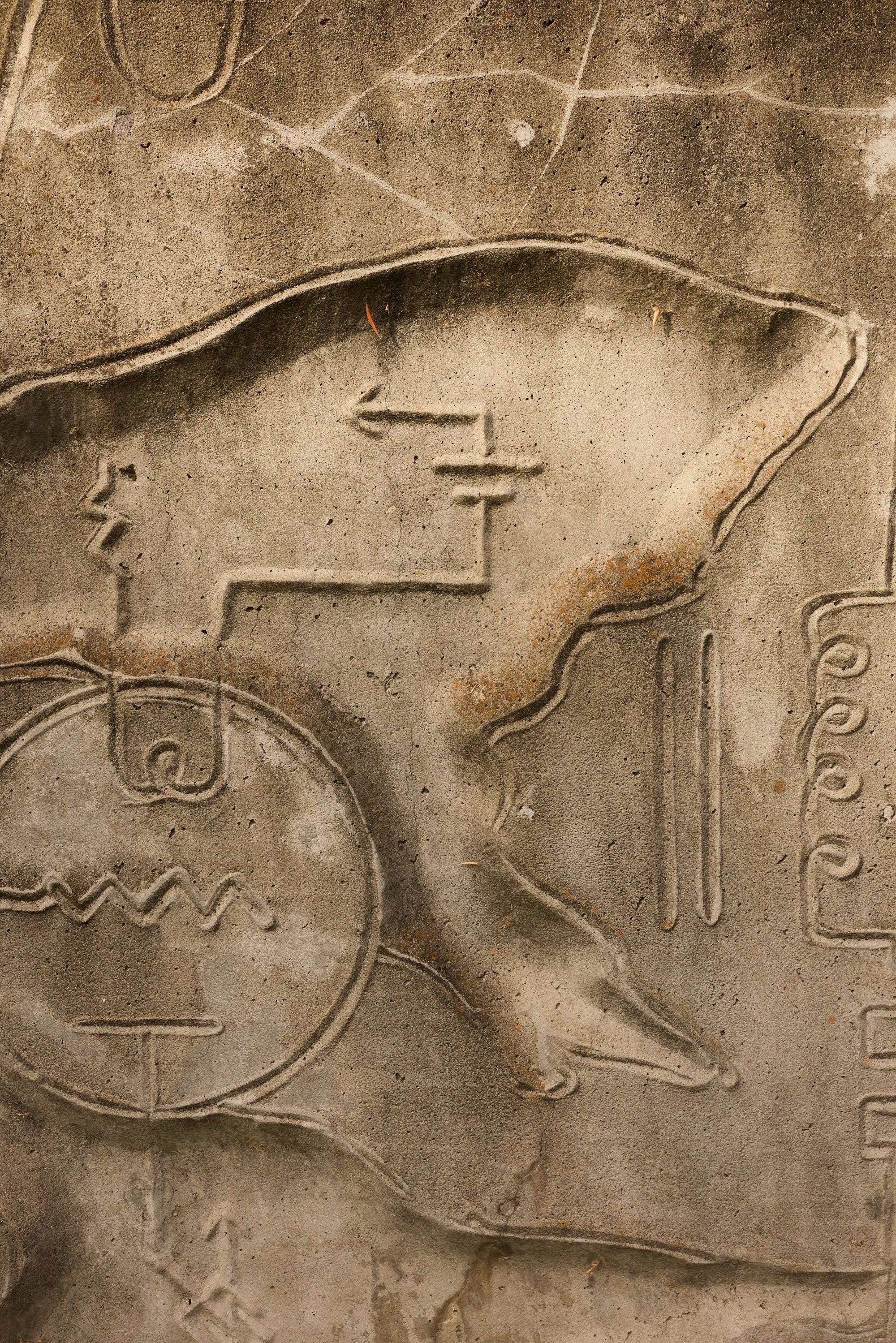
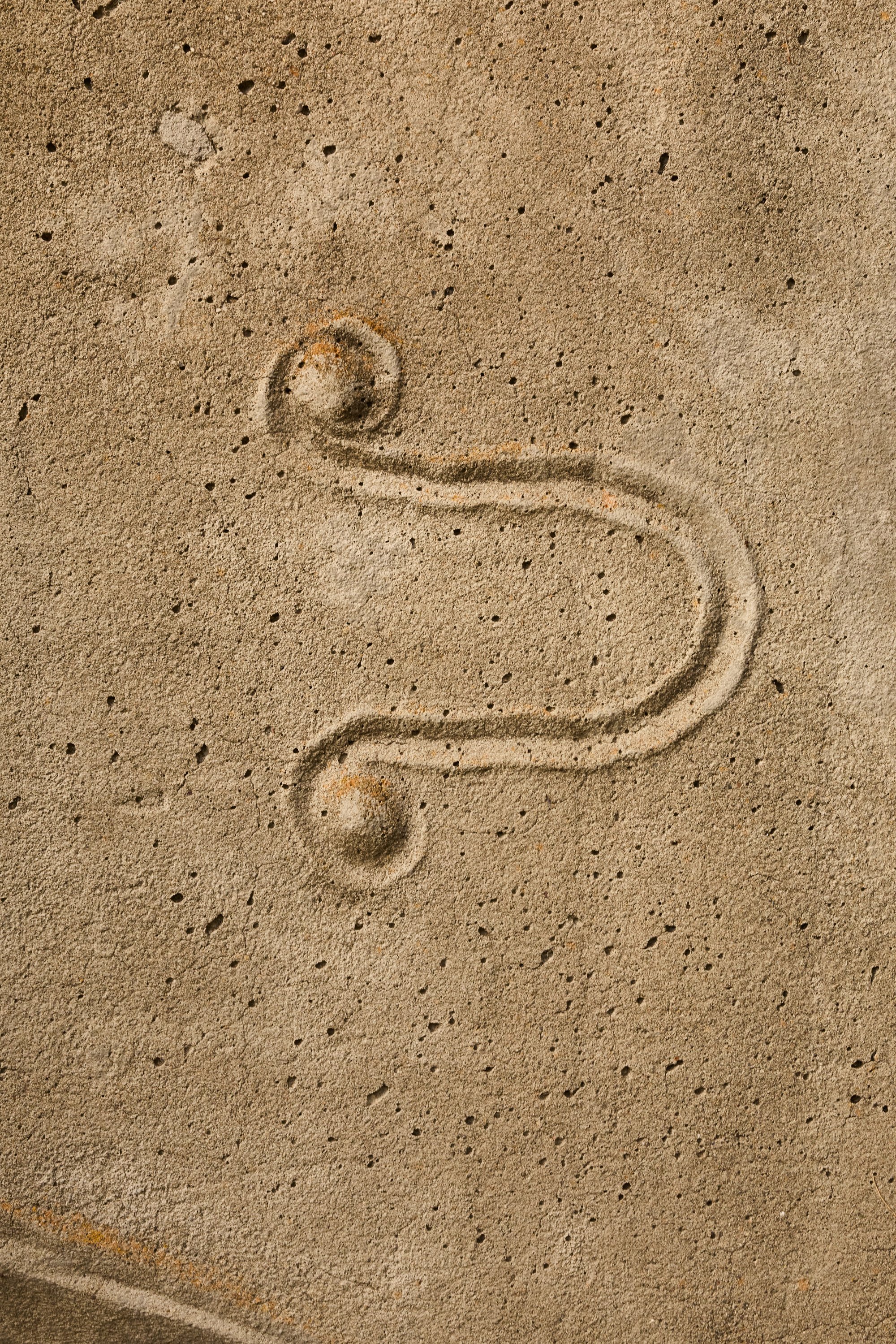
Woods extended this inquiry by inventing an entirely original alphabet and numbering system for the murals. Though the key to this language has been lost, the symbols persist as potent artifacts of human communication—neither fully readable nor purely decorative. They occupy a fertile middle ground, prompting reflection on the countless ways societies have sought to record, transmit, and preserve understanding, from petroglyphs and pictographs to modern technical notation.
Seen today alongside the bold modernist architecture of the campus, Woods’s murals retain a quiet magnetism. They do not announce themselves loudly; instead, they reward exploration and attention, echoing the rhythms of discovery and study. Their weathered surfaces bear time gracefully, reinforcing the sense that knowledge itself is cumulative, layered, and always in dialogue with the past.
As we look toward the future, these murals stand as both artifact and touchstone. They embody a belief shared by our namesakes Ray and Charles Eames and by Woods himself: That learning is not a static transfer of information, but an active, imaginative process. In their enduring presence, the murals remind us of humanity’s deep impulse to make meaning visible—and of the quiet power of symbols to connect minds across generations. ❤
— John Cary is the founding president & CEO of the Eames Institute of Infinite Curiosity. For seven years, John pursued the iconic Birkenstock campus as the ultimate home for the Institute and communities of curious problem-solvers. Follow along with our journey at www.eamesinstitute.org/museum
At Kazam! Magazine we believe design has the power to change the world. Our stories feature people, projects, and ideas that are shaping a better tomorrow.